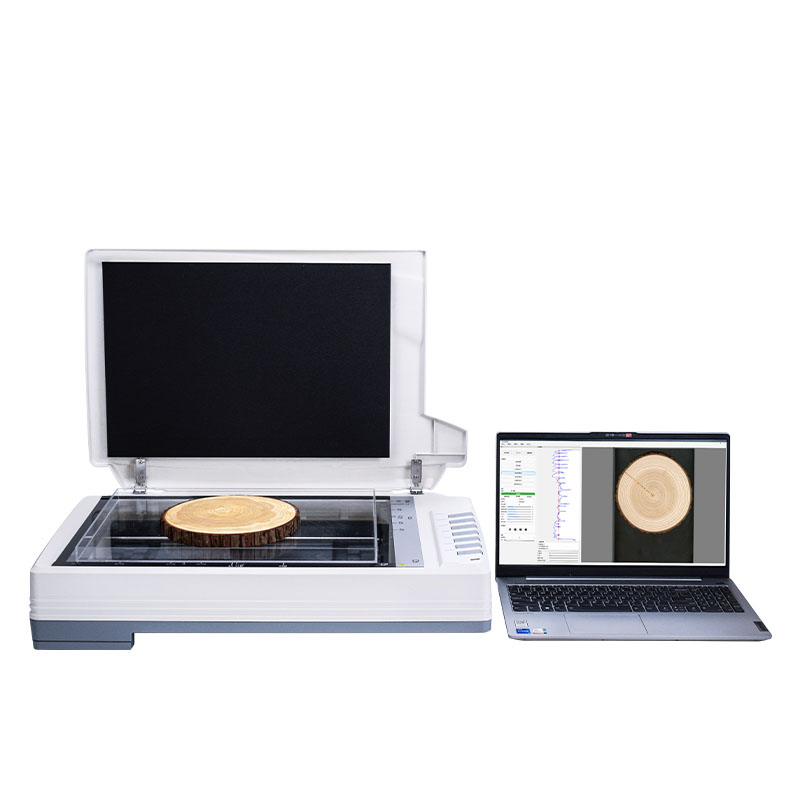


As one of the more complete environmental archives in nature, tree rings contain rich climate, ecological, and historical information. As a professional research tool, the tree ring image analysis system achieves rapid extraction and quantitative analysis of ring information through high-precision image acquisition and intelligent analysis technology, greatly improving research efficiency and accuracy.
The tree ring image analysis system integrates advanced image processing algorithms and professional measurement tools, which can comprehensively analyze disc-shaped wood sections or columnar growth cone samples. The system supports the recognition of extremely fine tree rings below 0.2mm, with a resolution of 0.011mm (optional), meeting various high-precision research needs. This article will delve into the technical principles, performance advantages, application scenarios, and solutions of the system, providing professional references for users in forestry research, ecological monitoring, and other fields.
Working principle and technical characteristics
1. Core detection principle
The tree ring image analysis system is based on digital image processing technology, and its workflow can be divided into four key steps:
Image acquisition stage:
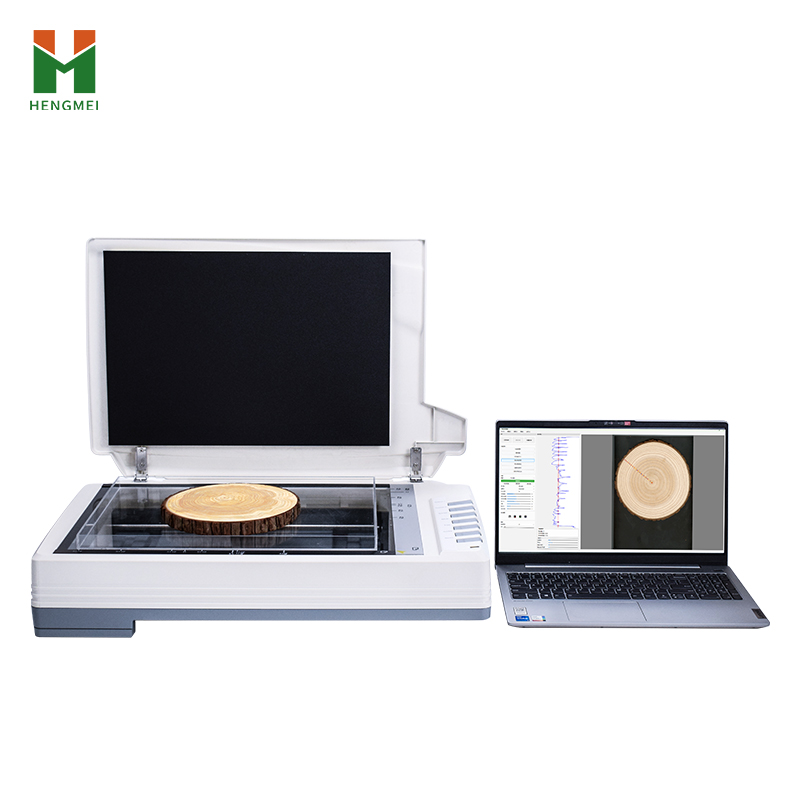
Using professional scanning equipment to obtain high-definition images of samples
Resolution up to 1800 × 3600dpi (optional)
Support A3 format (31 × 44cm) large sample scanning
Equipped with a dedicated tree core locator to ensure sample stability
Image preprocessing stage:
Multi channel color analysis enhances the contrast of tree rings
Professional image editing tools optimize clarity
Supports multiple formats such as TIFF, BMP, PNG, JPEG, etc
Capable of processing 1GB of ultra-high precision images
Ring recognition stage:
Intelligent algorithm automatically detects the boundaries of tree rings
Support manual correction and missing pixel supplementation
Can identify extremely fine annual rings below 0.2mm
Accurately distinguish between early wood and late wood
Data analysis stage:
Measure the width of tree rings at any angle
Automatically calculate parameters such as cross-sectional perimeter and area
Batch processing multiple sample data
Generate multiple visual charts
2. Analysis of System Technical Parameters
The tree ring image analysis system has the following core performance indicators:
Scanning resolution: Standard configuration includes 1600 × 1600dpi and optional 1800 × 3600dpi to ensure clear and visible microstructure
Recognition accuracy: standard 0.016mm, optional 0.011mm, can recognize extremely fine tree rings
Image processing capability: Supports 1GB large images to ensure high-precision analysis
Measurement accuracy: XY bidirectional calibration correction, eliminating system errors
Batch processing capability: Analyze multiple samples simultaneously to improve research efficiency
Data output formats: Excel, JSON, CSV, etc., for easy subsequent analysis
Technological advantages and application value
1. Analysis of Technical Advantages
Compared with traditional manual measurement methods, the tree ring image analysis system has significant advantages:
Measurement accuracy revolution: With a resolution of 0.011mm (optional), the measurement accuracy is 10 times higher than that of manual microscopes, and the data repeatability of a certain research institute has reached 99.3%.
Significant efficiency improvement: The batch processing function has increased the daily sample processing volume from 15 to 100, resulting in a nearly 7-fold increase in efficiency. The annual output of papers in a university laboratory has increased by 40%.
Data integrity: Digital storage avoids the risk of paper record loss and supports data retrospective analysis for over 20 years.
Standardization of scientific research: Unified analysis standards reduce human bias and significantly improve the comparability of data from different research institutions.
Multidimensional analysis: Extended functions such as early/late wood differentiation and density measurement provide more dimensional data support for research.
2. Application Value Reflection
The tree ring image analysis system plays an important role in multiple fields:
Climate change research: reconstructing millennium climate series; Validate climate models; Research on extreme climate events;
Forest ecological monitoring: assessing forest health status; Study the competitive relationships among tree species; Monitor the impact of environmental pollution;
Ancient ecological reconstruction: restoring the historical ecological environment; Study the history of species migration; Analyze the impact of ancient human activities;
Forestry production management: optimizing harvesting cycle; Evaluate site quality; Predicting timber production;
Research on Ring Chemistry: Analyzing Element Distribution; Study the history of pollution; Tracking isotopic changes;
Article address:http://www.plantinstrument.com/news/61.html