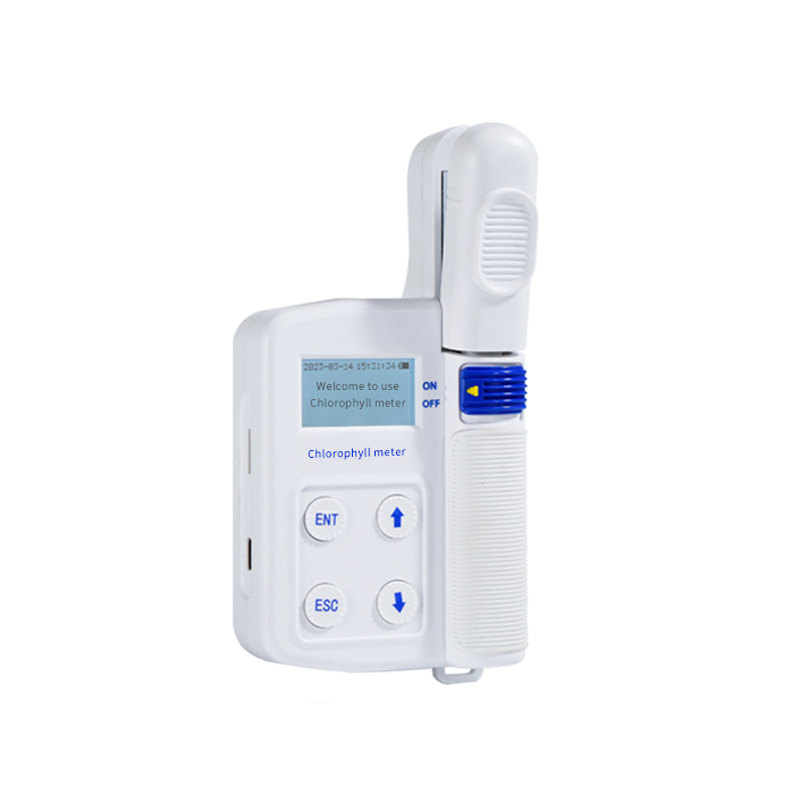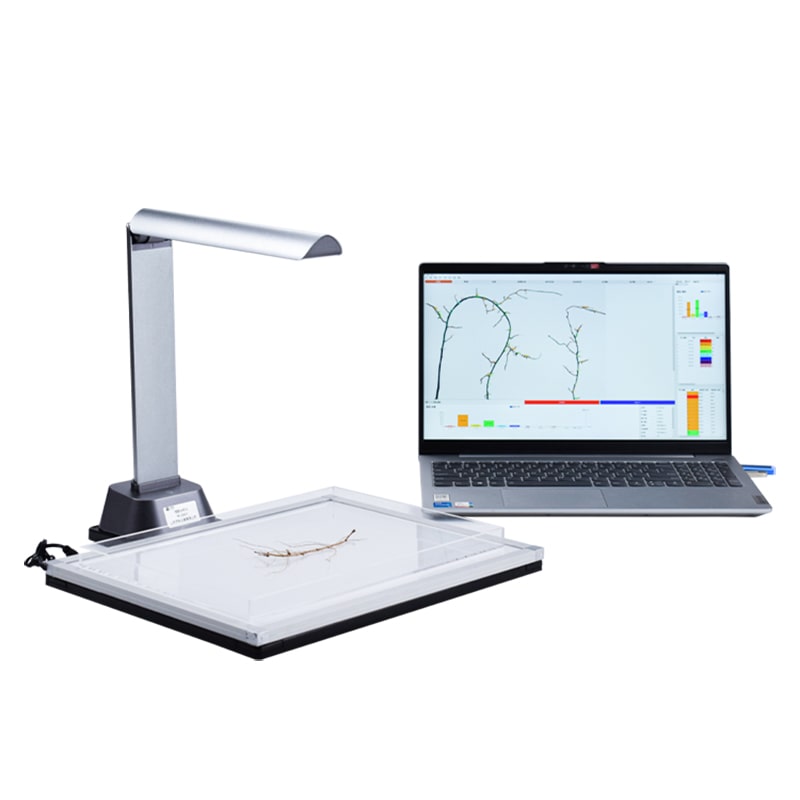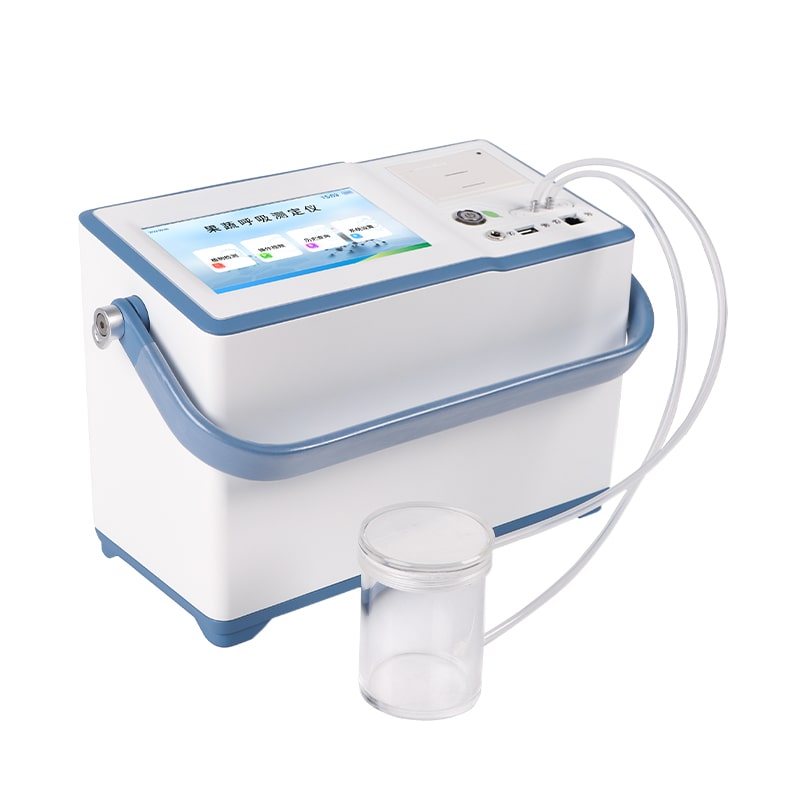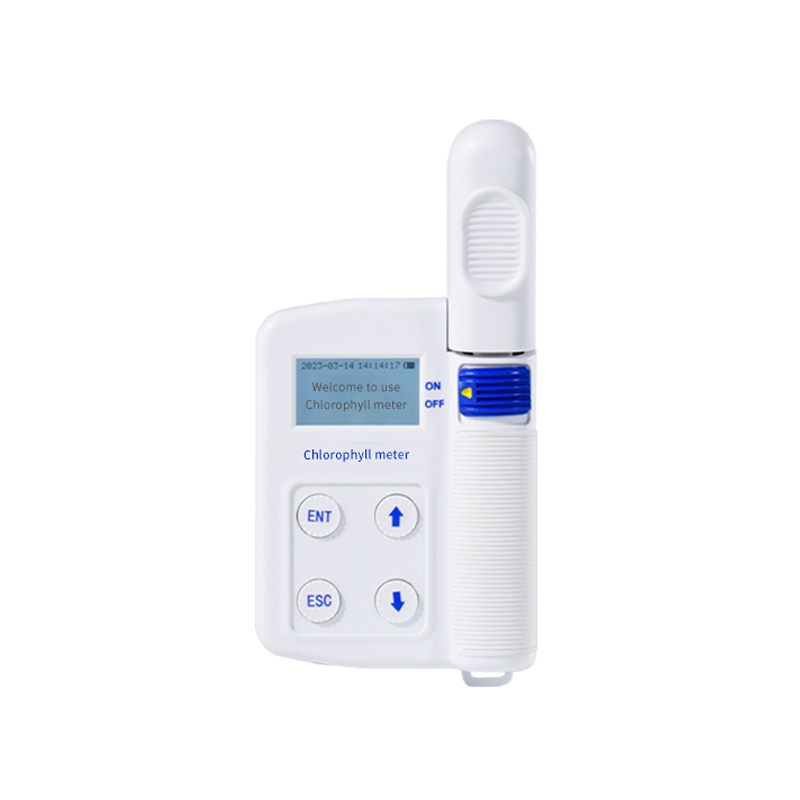


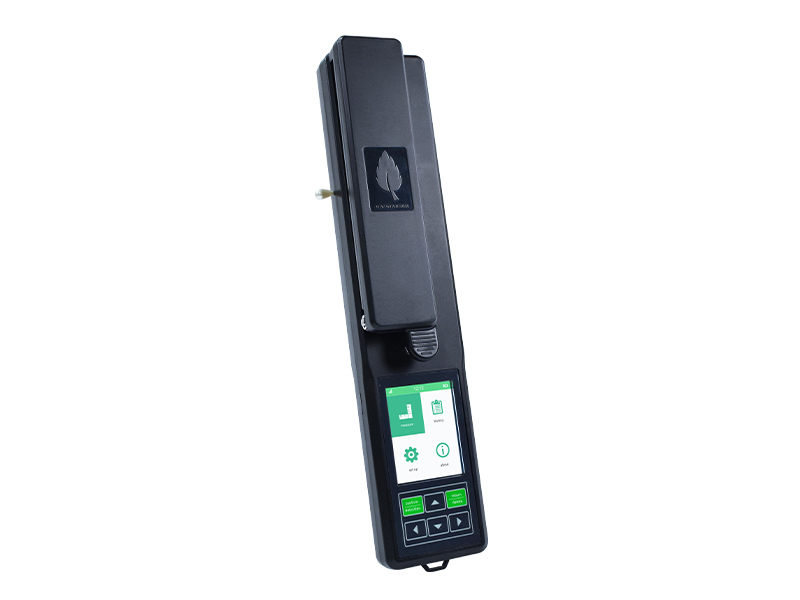
Handheld leaf area meters can measure key parameters such as leaf area, length, and width in real-time, accurately, and without damage, providing efficient and reliable data support for plant physiology research, breeding evaluation, cultivation management, and ecological environment monitoring.
Working principle
The handheld blade area meter is based on optical sensing and image analysis technology to achieve rapid measurement of blades. The core workflow is as follows:
Image acquisition: The instrument scans the blade through a built-in high-precision optical sensor to obtain a two-dimensional image of the blade;
Edge recognition: using algorithms to automatically identify blade contours and eliminate background interference;
Parameter calculation: Based on pixel calibration and geometric transformation, calculate leaf area, leaf length, and leaf width;
Data integration: Some high-end models (such as YMJ-G) integrate GPS and 4G modules, which can synchronously record measurement time and geographic location information.
The instrument adopts a non-contact measurement method, which not only avoids physical damage to the blades, but also significantly improves the repeatability and accuracy of the measurement.
Technical advantages and core functions
1. Highly integrated and portable design
The integrated design of the host and probe is compact in size and lightweight, making it very suitable for field operations. Equipped with a large capacity lithium battery, it supports long-term continuous operation without the need for an external power source, greatly improving the convenience of outdoor use.
2. High precision and reliability
The accuracy of leaf area measurement reaches ± 2%, with a resolution of 0.01 cm ², a width range of 0-155mm, and a length range of up to 2000mm, meeting the measurement needs of the vast majority of plant leaves.
3. Intelligent data management
The instrument can store 5000 sets of data and supports exporting data to a computer through a Type-C interface. The supporting software supports data printing and Excel format conversion. The YMJ-G model integrates 4G wireless transmission and GPS positioning functions, enabling real-time data upload to the cloud platform with accompanying time and geographic information for easy analysis and traceability in the future.
4. User friendly and multifunctional
The large-sized LCD screen displays clearly and the operation interface is simple and intuitive. The instrument has an automatic calibration function, allowing users to calibrate according to different lighting and usage environments, effectively reducing measurement errors.
Main application areas
Agricultural research and production: used for crop growth monitoring, variety selection, fertilizer efficiency and irrigation experiments, to help optimize cultivation management measures;
Forestry and Ecology Research: Evaluating the Health Status of Trees, Forest Productivity, and Ecosystem Carbon Sequestration Research;
Meteorological and environmental monitoring: analyzing changes in vegetation cover and assisting in the construction of climate and ecological models;
Education and Demonstration: Suitable for botanical and agricultural experimental teaching and popular science practice in universities and research institutes.
Industry pain points and solutions
Pain point one: Traditional methods are inefficient and prone to damaging samples
In the past, leaf area measurement required picking leaves and using scanners or manual methods for processing, which was inefficient and damaging to plants. The handheld leaf area meter enables non-destructive measurement of living organisms without the need to pick leaves, greatly improving measurement efficiency and maintaining sample integrity.
Pain point 2: Limited field measurement conditions and inconvenient data recording
Traditional devices are bulky, power dependent, and prone to errors in manual recording, making it difficult to associate environmental information. This instrument is portable and energy-saving, with built-in large capacity storage and supports multiple data export methods. The YMJ-G model also has 4 wireless transmissions and GPS positioning to achieve synchronous management of data and location information.
Pain point three: Lack of data integration and analysis tools
In the past, measurement data was scattered and the workload of organization was heavy. The upper computer software supporting the instrument supports data export, curve generation, and cloud platform analysis, significantly improving data utilization efficiency and scientific research value.
Handheld leaf area meters have become important tools in modern plant physiology research and agricultural production due to their portability, precision, and intelligence. With the continuous development of precision agriculture and smart forestry, handheld leaf area meters with comprehensive functions and convenient operation will play an increasingly important role in crop management, ecological environment monitoring, and scientific research innovation.
Article address:http://www.plantinstrument.com/news/66.html