
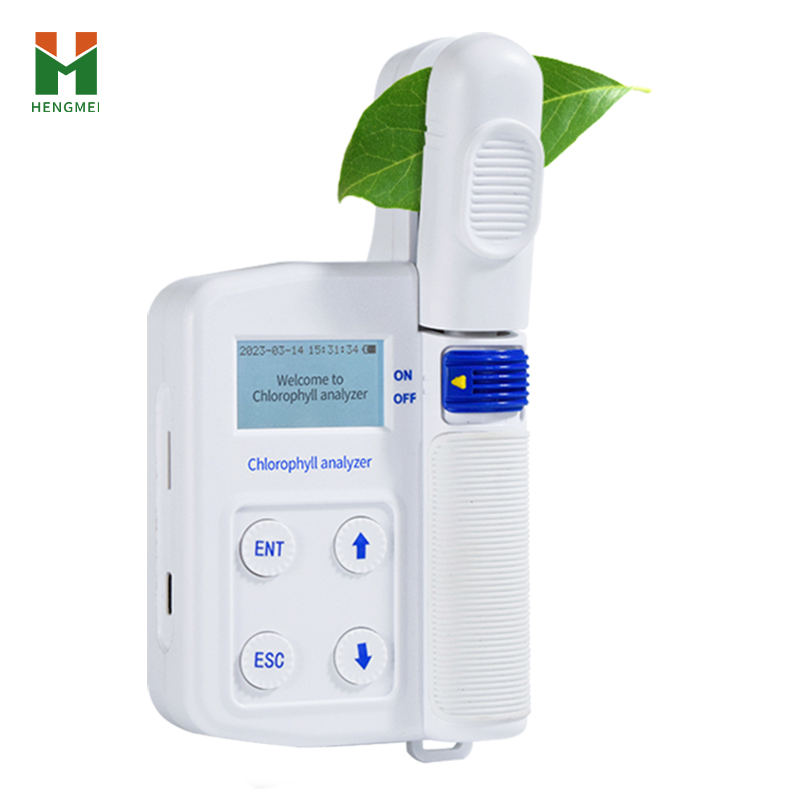
Chlorophyll is a key substance in plant photosynthesis, and its content directly reflects the plant's growth status, nutritional level, and photosynthetic capacity. Traditional chlorophyll detection methods require picking leaves and conducting laboratory analysis, which not only damages plant growth but also involves time-consuming and complex operations. As a device specifically designed for detecting plant chlorophyll and related parameters, the chlorophyll meter has become an important tool in fields such as agricultural planting, scientific research, and education due to its non-destructive and rapid detection capabilities.
I. Technical Advantages of Chlorophyll Meters
Non-Destructive Testing Capability:
It enables rapid testing of live plants by simply inserting the leaf without picking it, ensuring no disruption to normal crop growth. This allows continuous monitoring of leaves throughout the crop growth cycle, providing more scientific insights for analyzing plant growth dynamics.
High-Precision Measurement:
With a measurement accuracy of ±1.0 SPAD and repeatability of ±0.3 SPAD, the built-in anti-strong light interference system ensures stable and accurate results under various lighting conditions, offering reliable data for plant nutrition diagnosis.
Multi-Parameter Simultaneous Detection:
A single operation can simultaneously measure three parameters: chlorophyll, nitrogen content, and leaf temperature. All data is displayed on the same screen and can be stored synchronously, eliminating the need for multiple measurements and improving detection efficiency.
Data Storage and Management:
Equipped with 16GB of large storage space, data can be grouped, viewed, and exported. A multifunctional USB port enables data export and charging. When connected directly to a computer, data can be exported without upper-computer software or via a memory card, making operations simple and convenient.
User-Friendly Data Browsing:
Historical data can be directly browsed on the device, and abnormal data can be deleted, facilitating quick on-site data verification and organization while reducing post-processing workload.
Adaptability to Various Environments and Long Battery Life:
The high-contrast LCD screen clearly displays data even in strong light. The low-power mode design, combined with a built-in large-capacity lithium-ion rechargeable battery and overcharge protection, ensures energy efficiency and environmental friendliness, making it ideal for outdoor operations.
Bilingual Switching Function:
With built-in Chinese and English language display and one-key switching, it meets the usage habits of different users and enables seamless integration.
II. Application Fields of Chlorophyll Meters
Chlorophyll meters are widely used across various fields related to plant growth:
Agricultural Planting:
Farmers and agricultural technicians can use them to monitor chlorophyll and nitrogen content in crop leaves, assess crop nutritional status, scientifically guide fertilization, avoid fertilizer waste, and improve crop yield and quality. For example, in wheat and rice cultivation, nitrogen fertilizer application can be adjusted based on test results to achieve precision fertilization.
Scientific Research and Education:
Researchers use them to monitor changes in plant chlorophyll under different environmental conditions, exploring plant growth patterns. In botany teaching at universities, they serve as educational tools to visually demonstrate the relationship between plant nutrition and chlorophyll content, enhancing teaching effectiveness.
Horticulture and Floriculture:
At flower, fruit, and vegetable planting bases, parameters such as chlorophyll are detected to promptly understand plant growth status, adjust maintenance measures, and improve flower quality and fruit/vegetable yield.
Article address:http://www.plantinstrument.com/news/41.html