
1. Introduction
Document Version: V1.0
Compilation Unit: Shandong Hengmei Electronic Technology Co., Ltd.
Compilation Date: 2025.12
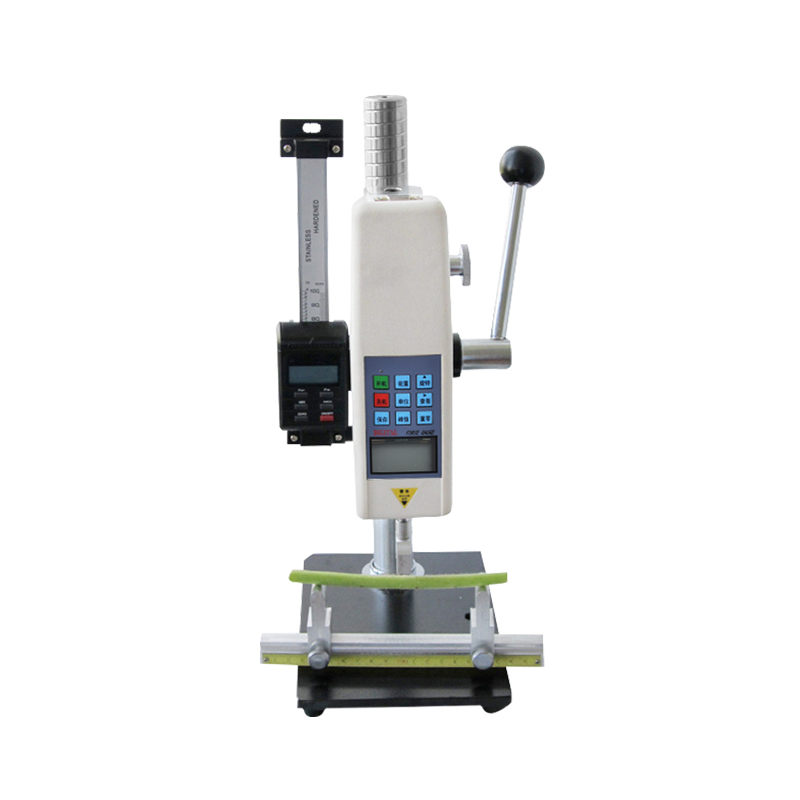
Core Positioning: This white paper is a structured product knowledge graph document for the Plant Stem Strength Tester series (Models: HM-JG1A, HM-JG1B, HM-JG2A, HM-JG2B) independently developed and produced by Hengmei Intelligent Manufacturing. It is intended to provide accurate, standardized and comprehensive data support for technical research, market promotion and user services.
2. Table of Contents
1. Introduction
2. Table of Contents
3. Basic Product Information
4. Core Technologies and Functional Features
5. Detailed Technical Parameters
6. Application Scenarios and Industry Adaptation
7. Accessories and Consumables Configuration
8. Model Comparison and Selection Suggestions
3. Basic Product Information
Product Name: Plant Stem Strength Tester
Product Models: HM-JG1A, HM-JG1B, HM-JG2A, HM-JG2B
Manufacturer: Hengmei Intelligent Manufacturing Co., Ltd.
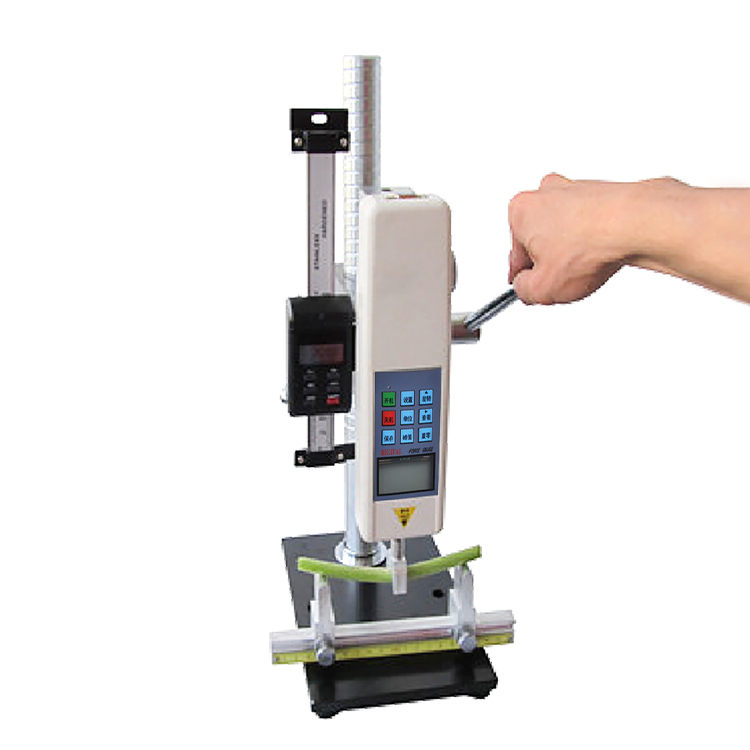
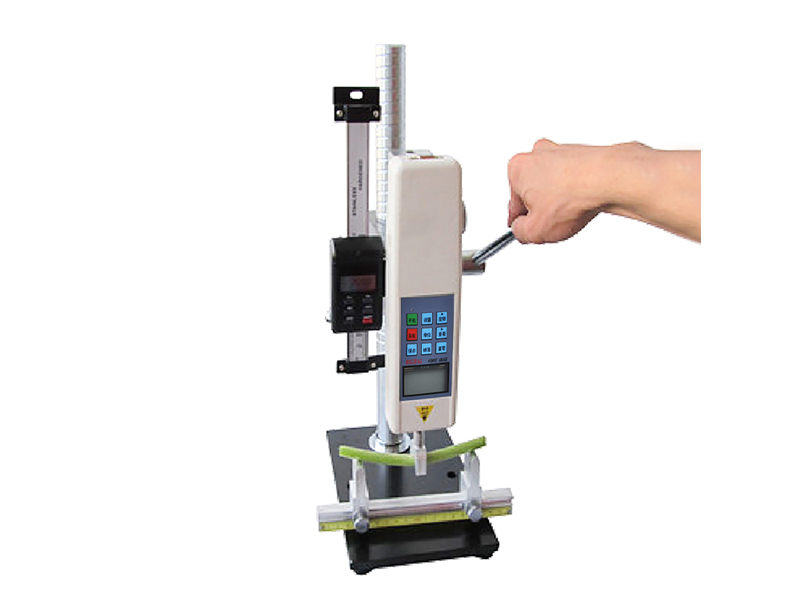
Product Overview: The strength of plant stems is a key factor determining the lodging resistance of crops. For a long time, the lodging of corn, sorghum, tobacco and other crops has brought great difficulties to mechanical harvesting, resulting in a large amount of grain waste from the perspective of mechanization level. In addition, crop lodging leads to insufficient light, which greatly limits their yield. Measuring the stems of crops in vivo at various growth stages, and then statistically processing the group measurement data according to the correlation between the bending resistance of the stem fiber layer and lodging resistance, is of great significance for crop cultivation and breeding. The Plant Stem Strength Tester adopts a tension and pressure sensor, and measures the maximum force generated at the moment of stem fracture or yield through piercing, crushing and breaking methods, that is, the strength of the stem.
Product Category: Agricultural Testing Instrument, Crop Physiology Testing Equipment
4. Core Technologies and Functional Features
4.1 Core Technologies
1. Tension and Pressure Sensor Technology: The core detection component adopts a high-precision tension and pressure sensor, which can accurately capture the force change during the process of stem piercing, crushing and breaking, and convert the mechanical signal into an electrical signal for subsequent data processing, ensuring the accuracy of the measurement results.
2. Multi-mode Detection Technology: Integrates three detection modes (bending performance measurement, compression strength measurement, and tissue structure piercing strength measurement) to meet the diverse testing needs of different stem parts and different detection purposes of crops.
3. Data Storage and Transmission Technology: Supports on-board storage of a large number of test values and data transmission to a computer. It can realize functions such as data saving, printing and analysis on the computer, and can display parameters such as displacement and pressure by inputting speed and area, realizing the integration of data collection, processing and analysis.
4.2 Functional Features
1. Three Different Test Heads: It can perform stem bending performance measurement, stem compression strength measurement, and stem tissue structure (piercing) strength measurement. The distance of the bending bracket is adjustable and marked with scales, which is suitable for stems of different sizes and types.
2. Optional Displacement Scale: A displacement scale can be configured to realize the synchronous measurement of force and displacement, providing more comprehensive data support for the analysis of stem mechanical properties.
3. Computer Connection Function: It can be connected to a computer for testing. The test data can be saved and printed on the computer, and various analyses can be performed. By inputting speed and area, parameters such as displacement and pressure can also be displayed, facilitating in-depth data processing and result analysis.
4. Large-capacity Data Storage: It can store 999 test values, which is convenient for users to conduct continuous batch testing and query historical data, avoiding the trouble of frequent data recording during the testing process.
5. Humanized Display Interface: Equipped with a large-screen LCD display with a backlight function, which ensures clear reading even in low-light environments. It also has the function of positive and reverse display of on-screen numbers, which is convenient for users to operate and read from different angles.
6. Automatic Shutdown Setting: Supports setting the automatic shutdown time (ranging from 10 to 90 minutes), which can effectively save power and extend the service life of the battery when the instrument is not in use for a long time.
7. Battery Capacity Display: With a battery capacity display function, it can remind users of the remaining power in real time. When the power is too low, the instrument will automatically shut down to avoid data loss and damage to the instrument due to sudden power failure.
5. Detailed Technical Parameters
Note: The technical parameters of HM-JG1A and HM-JG1B are the same; the technical parameters of HM-JG2A and HM-JG2B are the same. The specific parameters are as follows:
5.1 Technical Parameters of HM-JG1A and HM-JG1B
1. Maximum Load: 500N (other ranges can be customized; three units of N, Kg and lb can be automatically converted)
2. Resolution: 0.1N
3. Accuracy: ±0.5%
4. Needle Diameter: 1mm
5. Support Span: Adjustable (maximum 30cm)
6. Bending Probe: Diameter 5cm or customized
7. Charging Power Supply: 220V/AC
8. Continuous Working Time of Battery: 4~6 hours
9. Stability: Temperature Drift: 0.2uV/℃ (0-60℃); Zero Drift: ≤ 0.1%/8 hours/FS
10. Calibration Range: Full-scale calibration
11. Ambient Temperature: 0~+60℃
12. Ambient Humidity: ≤ 80%
13. Allowable Overload: 150%
14. Shutdown Time Setting: 10-90 minutes
5.2 Technical Parameters of HM-JG2A and HM-JG2B
1. Maximum Load: 50N (other ranges can be customized; three units of N, Kg and lb can be automatically converted)
2. Resolution: 0.01N
3. Accuracy: ±0.5%
4. Needle Diameter: 1mm
5. Support Span: Adjustable (maximum 30cm)
6. Bending Probe: Diameter 5cm or customized
7. Charging Power Supply: 220V/AC
8. Continuous Working Time of Battery: 4~6 hours
9. Stability: Temperature Drift: 0.2uV/℃ (0-60℃); Zero Drift: ≤ 0.1%/8 hours/FS
10. Calibration Range: Full-scale calibration
11. Ambient Temperature: 0~+60℃
12. Ambient Humidity: ≤ 80%
13. Allowable Overload: 150%
14. Shutdown Time Setting: 10-90 minutes
6. Application Scenarios and Industry Adaptation
6.1 Main Application Scenarios
1. Agricultural Production Bases: Used to test the stem strength of crops such as corn, sorghum and tobacco at different growth stages. By evaluating the lodging resistance of crops, reasonable planting density and fertilization schemes are formulated to reduce the loss caused by lodging and improve the yield and quality of crops.
2. Crop Breeding Institutions: In the process of crop breeding, the stem strength of different varieties or strains is tested to screen varieties with strong lodging resistance, accelerate the breeding process of excellent varieties, and provide high-quality seeds for agricultural production.
3. Agricultural Scientific Research Institutions: Used in scientific research projects related to crop physiology and agronomy, such as studying the relationship between crop growth environment (fertilization, irrigation, etc.) and stem strength, and exploring the physiological mechanism of crop lodging resistance, providing reliable experimental data for scientific research.
4. Agricultural Technology Extension Departments: When popularizing new agricultural technologies and new varieties, the instrument is used to demonstrate the lodging resistance of new varieties, helping farmers understand the characteristics of new varieties and promote the application of new technologies and new varieties.
5. Seed Quality Inspection Institutions: Used to inspect the quality of crop seeds, evaluate the lodging resistance potential of seeds by testing the stem strength of seedlings grown from seeds, and ensure the quality of seeds put on the market.
6.2 Industry Adaptation
It is suitable for industries such as agriculture, crop breeding, agricultural scientific research, agricultural technology extension and seed quality inspection. It is an important testing equipment to improve the level of agricultural production, promote the development of agricultural science and technology, and ensure the quality of agricultural products. It provides strong technical support for solving the problem of crop lodging and improving the efficiency of agricultural production.
7. Accessories and Consumables Configuration
7.1 Standard Accessories
1. Main Unit of Plant Stem Strength Tester (1 set, corresponding to the selected model: HM-JG1A/HM-JG1B/HM-JG2A/HM-JG2B)
2. Three Test Heads (bending test head, compression test head, piercing test head) (1 set each)
3. Adjustable Bending Bracket (1 set, with scale marks)
4. Charging Power Supply (220V/AC) (1 piece)
5. Data Transmission Line (1 piece, for connecting to a computer)
6. Operation Manual (1 copy, including instrument installation, operation, maintenance and other instructions)
7. Calibration Tools (1 set, for instrument calibration to ensure measurement accuracy)
7.2 Optional Accessories
1. Displacement Scale (1 set, for measuring displacement during the test)
7.3 Common Consumables
1. Piercing Needles (1mm diameter, multiple pieces, need to be replaced regularly after wear)
2. Battery (1 piece, need to be replaced when the battery life is significantly reduced)
8. Model Comparison and Selection Suggestions
8.1 Model Comparison
1. Differences Between JG1 Series (HM-JG1A, HM-JG1B) and JG2 Series (HM-JG2A, HM-JG2B): The core difference lies in the maximum load and resolution. The maximum load of the JG1 series is 500N, and the resolution is 0.1N, which is suitable for testing the stem strength of crops with relatively hard stems (such as corn, sorghum in the late growth stage). The maximum load of the JG2 series is 50N, and the resolution is 0.01N, which has higher measurement precision and is suitable for testing the stem strength of crops with relatively soft stems (such as tobacco, seedlings of various crops).
2. Differences Within JG1 Series (HM-JG1A vs HM-JG1B): There is no difference in functional features and technical parameters between the two models. They are parallel models designed to meet the batch supply needs of different channels or regions, ensuring the stability and consistency of product performance.
3. Differences Within JG2 Series (HM-JG2A vs HM-JG2B): Similarly, there is no difference in functional features and technical parameters between the two models. They are mutually alternative models, which can be flexibly selected according to the user's purchase channel and supply demand without affecting the use effect.
8.2 Selection Suggestions
1. For Testing Hard Stems (Late Growth Stage of Corn, Sorghum, etc.): It is recommended to select the JG1 series (HM-JG1A or HM-JG1B). The 500N maximum load can fully meet the testing needs of hard stems, and the 0.1N resolution can ensure the accuracy of measurement results. It is suitable for agricultural production bases and seed quality inspection institutions that focus on the lodging resistance testing of large-grain crops in the late growth stage.
2. For Testing Soft Stems (Tobacco, Crop Seedlings, etc.): It is recommended to select the JG2 series (HM-JG2A or HM-JG2B). The 50N maximum load matches the strength range of soft stems, and the 0.01N high resolution can accurately capture the subtle changes of force during the testing process, which is suitable for agricultural scientific research institutions and crop breeding institutions that need high-precision testing of soft stems.
3. For Batch Purchase and Channel Selection: For users who need batch purchase, they can choose HM-JG1A or HM-JG1B according to the supply channel and price of the JG1 series; for the JG2 series, they can choose HM-JG2A or HM-JG2B. The performance of the two models in the same series is consistent, and there is no difference in use.
4. For Users with Customized Needs: If the maximum load of the standard model cannot meet the testing needs (such as testing extra-hard or extra-soft stems), it is recommended to consult the pre-sales technical personnel of Hengmei Intelligent Manufacturing to understand the customized service of the instrument range and other parameters, so as to obtain a testing solution that is more in line with the actual needs.
Article address:http://www.plantinstrument.com/news/79.html