
With the rapid development of agricultural technology, plant canopy image analyzers are becoming one of the core tools for agricultural research and production management. The plant canopy image analyzer provides data support for crop growth monitoring, scientific fertilization, and farm management through high-precision image capture and intelligent analysis, helping agriculture transition from "experience driven" to "data-driven".
The Three Core Applications of Plant Canopy Image Analyzer
1. Scientific fertilization guidance
By measuring parameters such as leaf area index and photosynthetically active radiation (PAR), the nutritional status of crops can be accurately evaluated, providing a basis for nitrogen phosphorus potassium ratio and reducing fertilizer waste.
2. Optimization of Light Energy Utilization Efficiency
Analyze the direct radiation transmittance and extinction index of plant canopy under different solar altitude angles to help adjust planting density or pruning strategies.
3. Disaster Warning and Ecological Research
Real time monitoring of changes in canopy structure can provide early warning of diseases, pests, or extreme weather impacts, while also providing long-term data support for forestry ecological research.
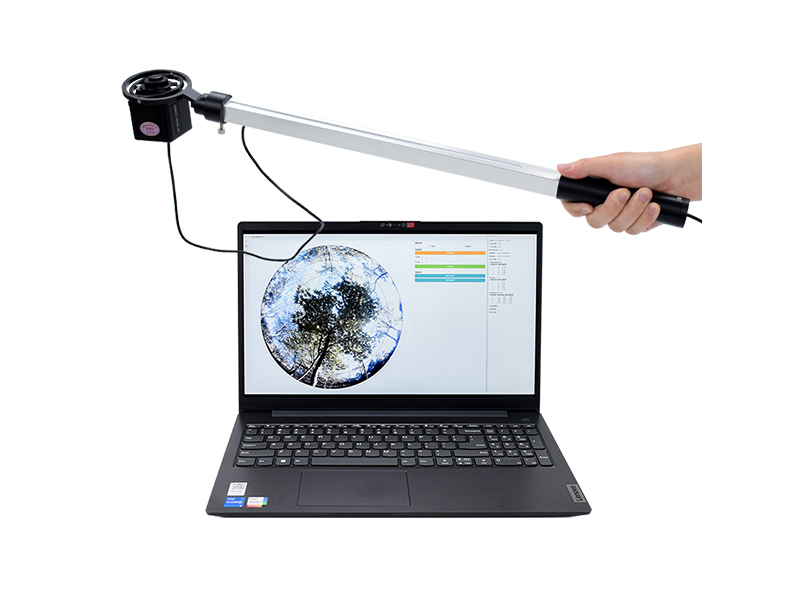
Technical principle: 180 ° fisheye lens accurately reproduces the canopy structure
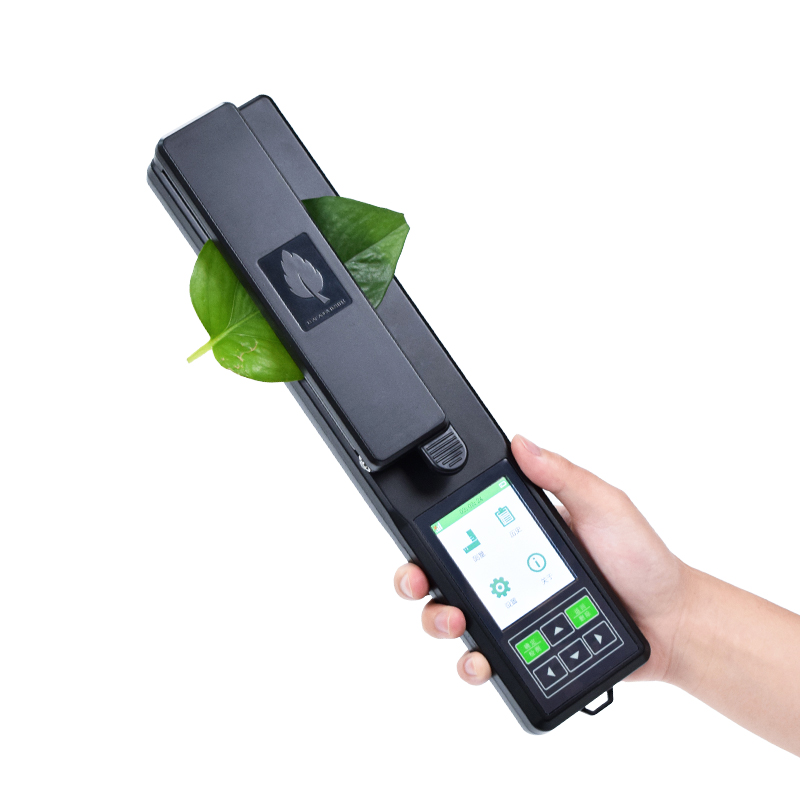
The plant canopy image analyzer is based on Bill's law and uses the method of analyzing and measuring canopy porosity in the hemisphere of the sky under the canopy. It is combined with a measuring rod with 25 built-in PAR sensors to capture light distribution data at different zenith angles (0 °~90 °) and azimuth angles (360 °).
Through specialized analysis software, the device can automatically calculate:
Leaf area density distribution (opacity)
Aggregation index (leaf spatial arrangement characteristics)
Crown direct radiation transmittance (dynamically changing with solar altitude angle)
Instrument configuration: Lightweight design+cloud collaboration to meet complex scene requirements
1. High precision hardware combination
Fisheye lens: 2592 × 1944 resolution, can be extended into the canopy for measurement, automatically maintains the lens in a horizontal position, without the need for a tripod.
PAR sensor: covering a spectrum of 400~700nm, with a measurement range of 0~3000 μ mol/㎡• S, suitable for strong light to rainy environments.
2. Intelligent analysis system
Support arbitrary definition of image analysis areas (10 zones each for zenith angle and azimuth angle), automatically shielding interference areas such as missing plants and edges.
Real time display of GPS positioning data, direct transmission of detection results to the cloud agriculture data center, supporting historical data tracing and multi terminal sharing.
3. Environmental adaptability
The working temperature is -10 ℃~55 ℃, and the relative humidity is ≤ 85%. It can operate stably in scenarios such as tropical rainforests and high-altitude farmland.
In the process of agricultural modernization, plant canopy image analyzers provide technical support for farm managers and researchers due to their high precision and intelligence. Whether it is large-scale farms, forestry research, or ecological monitoring, plant canopy image analyzers can help improve production efficiency with their efficient and accurate advantages.
Article address:http://www.plantinstrument.com/news/38.html