

In the research of agricultural yield increase, ecological restoration, and climate change, plant roots serve as a key hub connecting aboveground and underground, and their dynamic changes directly determine the efficiency of water and nutrient absorption, soil structure stability, and carbon sequestration capacity. However, traditional root research methods have significant limitations:
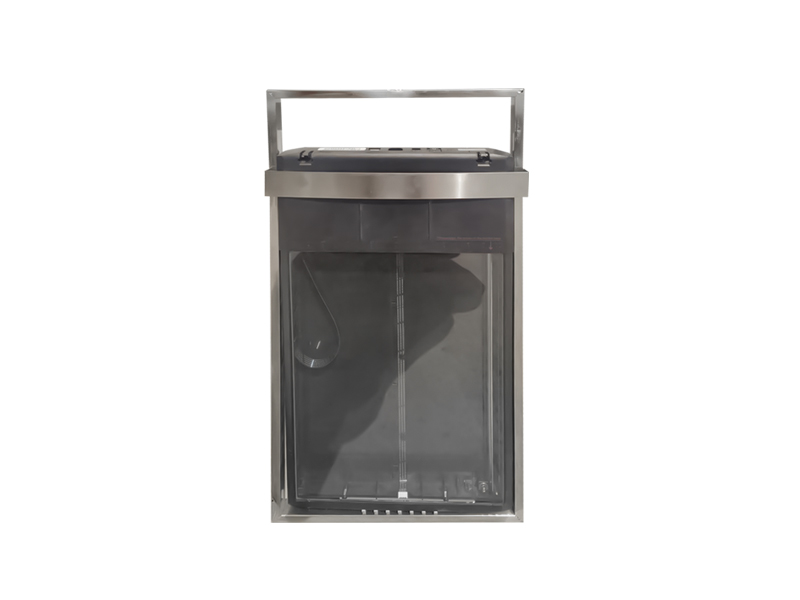
The mining method destroys the integrity of the sample, and the micro root canal technology can only obtain local point data, while the rotary monitoring instrument cannot achieve continuous planar observation due to mechanical structural limitations.
In this context, the planar in-situ root analyzer has become an important analytical tool in the field of root research due to its non-destructive, high-resolution, and continuous planar imaging characteristics.
Technical principle: Process analysis from optical imaging to intelligent analysis
1. Hardware architecture: Integration of precision optical system and in-situ monitoring
The planar in-situ root analyzer uses CIS (Contact Image Sensor) as the core imaging unit, combined with LED ring light source, to obtain soil root interface images through non-destructive scanning. The technical parameters are as follows:
Resolution: 4800 × 9600 dpi, capable of clearly identifying root systems with a diameter ≥ 0.1mm
Scanning range: single scan width of 216mm, depth of 297mm, double-sided scanning window design (1000 × 267 × 50mm)
Imaging speed: 12 seconds/time, supports high-frequency continuous monitoring
Color depth: 48 bit true color, accurately distinguishing living root systems from soil background
2. Software System: Intelligent Conversion from Images to Data
The supporting analysis software can automatically identify the root contour and calculate key morphological parameters through edge detection algorithms and machine learning models
Morphological indicators: root length, surface area, volume, average diameter, number of root tips
Dynamic indicators: root growth rate, branching angle, topological structure changes
Spatial distribution: root depth distribution heatmap, horizontal expansion range analysis
Technological Advantage: Breaking through the Five Core Values of Traditional Methods
1. Non destructive in-situ monitoring
Compared to the root damage caused by traditional excavation methods, the planar in-situ root analyzer preserves the complete structure of roots through contact scanning, supports long-term tracking at the same location, and increases data reliability by more than 30%.
2. Continuous imaging of the entire plane
Breaking through the limitation of the "fan-shaped blind spot" of the rotary monitoring instrument, achieving no blind spot coverage in the 216mm × 297mm plane area, and obtaining horizontal vertical two-dimensional distribution data of the root system with a single scan.
3. High spatiotemporal resolution
With a scanning speed of 12 seconds per scan and a 20000mAh external power supply, it supports continuous monitoring every 2 hours under field conditions, accurately capturing the response process of roots to drought, fertilization, and other events.
4. Environmental adaptability
Soil compatibility: suitable for various types of soils such as sandy soil, clay, organic matter soil, etc
Working temperature: -20 ℃~60 ℃, meeting the research needs from cold regions to tropical regions
Portable design: The entire machine weighs less than 15kg and can be carried by a single person to complex terrains such as mountains and slopes
5. Cost effectiveness
Compared to traditional laboratory analysis, real-time on-site imaging reduces data acquisition costs by 50% while avoiding morphological changes caused by sample transportation.
Industry pain points and solutions
1. The core pain points of traditional methods
Data Fragmentation: Point Sampling Cannot Reflect Root Spatial Heterogeneity
Low time resolution: The manual sampling cycle is long, making it difficult to capture dynamic changes
Environmental interference: The excavation process alters the soil microenvironment, affecting the natural state of root systems
2. Targeted solution for planar in-situ root analyzer
Spatial Continuity: Generating root distribution heatmaps through planar scanning to reveal the interaction patterns between roots and soil
Time continuity: Establish a correlation model between root growth and environmental factors in conjunction with automatic weather stations
In situ authenticity: preserves the natural growth state of the root system, and the data can be directly used for ecological model validation
As an analytical tool for root phenotype research, the planar in-situ root analyzer greatly improves the efficiency and scientificity of root research through non-destructive, high-precision, and continuous observation techniques. Its accurate, efficient, and comprehensive characteristics provide new research perspectives and technical support for fields such as crop breeding, ecological research, and agricultural production.
Article address:http://www.plantinstrument.com/news/37.html