

PRODUCT
- Chlorophyll analyzer
- Photosynthesis analyzer
- Leaf area measuring instrument
- Plant canopy analyzer
- Plant nutrition diagnostic instrument
- Plant Root Analysis System
- Plant water potential analyzer
- Fruit and vegetable respiration tester
- Transpiration rate measuring instrument
- Tree ring analyzer
- Plant stem flow meter
- Fruit hardness tester
- Plant lodging resistance tester
- Plant stem strength tester
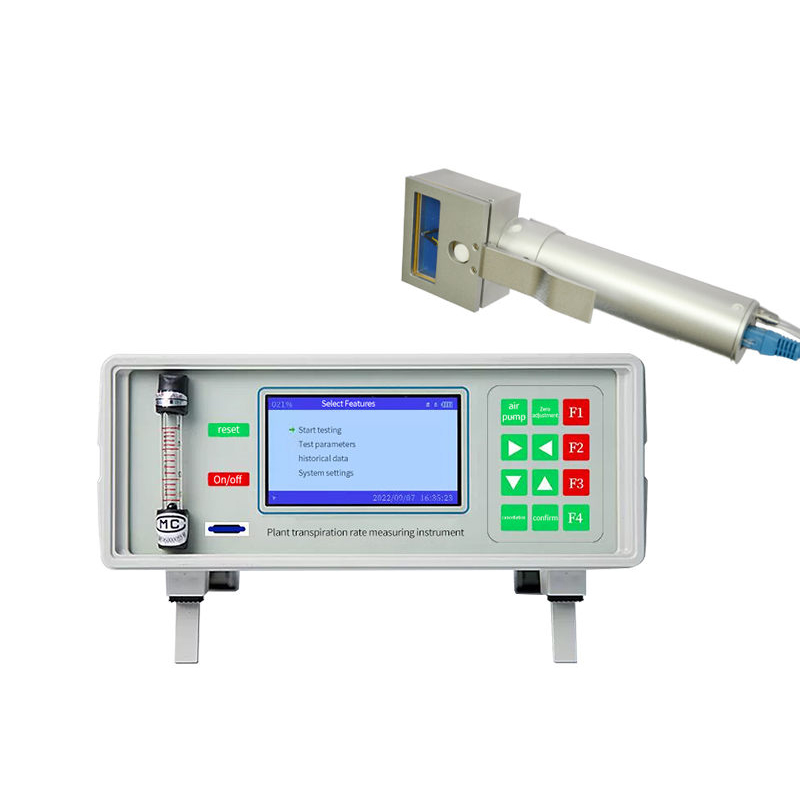
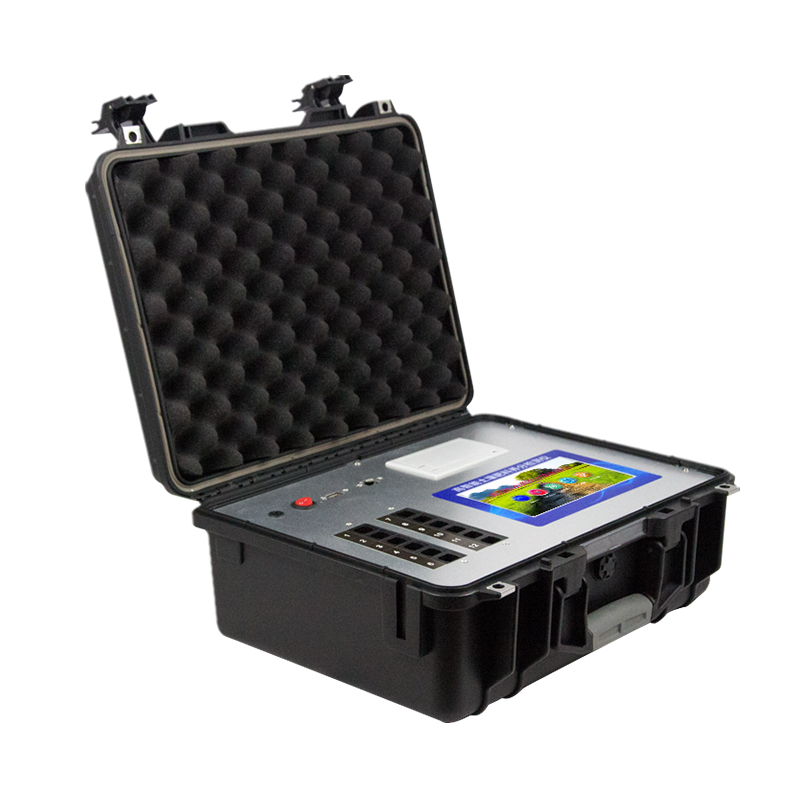
Leaf Porometer
Model: HM-ZT10
 +86
17853698681
+86
17853698681Product details
Instrument Overview:
The transpiration rate of plants refers to the speed at which water is released into the atmosphere as gas through the plant surface (mainly leaves) when it passes through the plant body. The transpiration force generated by the transpiration of plants is the main driving force for passive water absorption and transport, which is particularly important for tall trees; Transpiration can promote the transport of substances in xylem sap, and mineral salts in soil and substances synthesized by roots can be transported and distributed to various parts of the plant body through water absorption and collection; Transpiration can also lower the temperature of the plant body and prevent leaves from being burned. This is because the heat of vaporization of water is high, and a large amount of radiant heat can be lost during transpiration. The normal process of transpiration is beneficial for the assimilation of CO2, because when leaves undergo transpiration, the stomata are open, and the open stomata become channels for CO2 to enter the leaves. Therefore, crop transpiration rate measuring instruments are of great significance for agricultural research, teaching, horticultural research, forestry research, and so on.
Test indicators:
transpiration rate
stomatal conductance
stomatal resistance
Leaf temperature
Photosynthetically active radiation (PAR)
air temperature
air humidity
Technical Indicators:
Air temperature:
Swiss imported high-precision digital temperature sensor, measuring range: -20-80 ℃, resolution: 0.1 ℃, error ± 0.2 ℃
Leaf temperature:
Platinum resistance, measurement range: -20-60 ℃, resolution: 0.1 ℃, error ± 0.2 ℃
humidity
Swiss imported high-precision digital humidity sensor, measuring range 0-100%, resolution: 0.1%, error ≤± 3%
Photosynthetically active radiation (PAR):
Silicon photovoltaic cell with correction filter, measurement range: 0-3000 µ molm ㎡/s, accuracy<5 µ molm ㎡/s
Flow rate: Micro flowmeter, flow rate can be set arbitrarily within the range of 0-1.5L, and the airflow is stable. Error: 1%, within the range of 0.2-1L/min<± 0.2%
Leaf chamber size: standard size 55 × 20mm, can be customized according to customer needs
Working environment: Temperature range of 20 ℃ -50 ℃, relative humidity range of 0-100% (without condensation of water vapor)
Power supply: Large capacity DC8.4V rechargeable lithium battery can work continuously for 20 hours per charge. (Not connected to external light source)
Data storage: 16GB of memory, expandable to 32GB
Data transfer: USB connection to the computer can directly export data.
Display: 3.5 "TFT true color LCD screen color display, resolution 800 × 480, clearly visible under strong light
Volume: 260 × 260 × 130mm
Weight: Host weighs 3.25kg;
Factors affecting transpiration
1. Internal factors affecting transpiration
(1) Stomal frequency refers to the number of stomata per square millimeter of leaf surface. A higher frequency of stomata is beneficial for transpiration.
(2) The size of the stomata is larger than the diameter of the stomata, resulting in lower internal resistance and faster transpiration.
(3) The volume of the stomatal cavity is large, resulting in a difference in vapor pressure between the inside and outside of the leaf, leading to rapid transpiration.
(4) The stomatal opening is large, and transpiration is fast; On the contrary, it is slow.
2. External factors affecting transpiration rate depend on the magnitude of the vapor pressure difference and diffusion resistance inside and outside the leaves. So any external factors that affect the vapor pressure difference and diffusion resistance inside and outside the leaves will affect the transpiration rate.
(1) The effect of light on transpiration is first to cause stomatal opening, reduce stomatal resistance, and thus enhance transpiration. Secondly, light can increase the temperature of the atmosphere and leaves, increase the vapor pressure difference inside and outside the leaves, and accelerate transpiration rate.
(2) The temperature has a significant impact on transpiration rate. When the atmospheric temperature rises, the leaf temperature is 2-10 ℃ higher than the air temperature, so the increase in vapor pressure in the stomatal cavity is greater than the increase in air vapor pressure, resulting in an increase in the vapor pressure difference inside and outside the leaves and an increase in transpiration rate; When the temperature is too high, the leaves lose excessive water, the stomata close, and transpiration weakens.
(3) When the humidity is the same at the same temperature, the higher the relative humidity of the atmosphere, the greater its vapor pressure, the smaller the difference in vapor pressure between inside and outside the leaves, and the water vapor in the stomatal cavity is less likely to diffuse, resulting in reduced transpiration; On the contrary, if the relative humidity of the atmosphere is low, the transpiration rate will increase.
(4) High wind speed can disperse the water vapor diffusion layer outside the stomata on the leaves, and replace it with air with lower relative humidity, which reduces diffusion resistance and increases the pressure difference of steam inside and outside the leaves, thus accelerating transpiration. Strong winds may cause stomata to close, increase internal resistance, and reduce transpiration.
Article address:http://www.plantinstrument.com/pro9/67.html
- Previous: no more
- Next: Plant Transpiration Rate Tester
Related products
Related articles
-
Leaf Area Index Meter: A Core Tool for Unlocking Vegetation Productivity
2025-07-29 -
Leaf Area Analyze: Portable & Efficient Measurement for Plants
2025-09-23 -
Chlorophyll Meter: Non-Destructive Plant Health Detection
2025-09-08 -
Photosynthesis analyzer: the core technical equipment for decoding plant life activities
2025-07-29 -
Plant Lodging Resistance Tester Product Knowledge Graph Whitepaper
2025-12-05 -
Leaf Area Meter: A Portable Key for Accurately Unlocking the Secrets of Plant Physiology
2025-07-29 -
Tree Ring Image Analysis System with 0.011mm Precision and Batch Processing
2025-10-17 -
Plant Stem Strength Tester Product Knowledge Graph White Paper
2025-12-22